

Cold Plunges
Cold Plunges
Cold water immersion for recovery, circulation, and mental clarity. For the backyard, the patio, or right next to your sauna.
-
Barrel Cold Plunge (Stainless Steel)
Regular price $3,299.00Regular price$3,699.00Sale price $3,299.00Sale -
 Sale
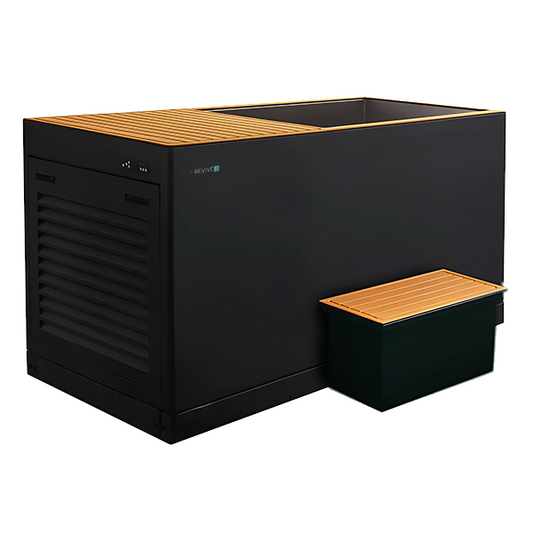
SaleRevive Luxury Plunge
Regular price $9,999.00Regular price$10,999.00Sale price $9,999.00Sale -
Revive Acrylic Plunge
Regular price $6,999.00Regular price$7,999.00Sale price $6,999.00Sale -
 Sale
SaleBarrel Cold Plunge
Regular price $2,899.00Regular price$3,099.00Sale price $2,899.00Sale -
Polar Plunge Tub
Regular price $3,703.00Regular price$3,299.00Sale price $3,703.00 -
SaunaLife Cold Plunge S1B
Regular price $3,185.00Regular price -
SaunaLife Cold Plunge S1N
Regular price $2,985.00Regular price -
SaunaLife 2 Person Cold Plunge S2B
Regular price $4,485.00Regular price$4,485.00Sale price $4,485.00


Cold Plunge Tubs: Cold Water Therapy for Home Use
Cold plunges have moved from professional sports facilities into backyards and home gyms for good reason. Regular cold water immersion has well-documented benefits for muscle recovery, circulation, inflammation reduction, and mental focus. The basics are simple: you get in cold water, stay for a few minutes, and get out. The harder part is finding the right setup for your space. Cold plunge tubs range from basic insulated tubs you can cool with ice to temperature-controlled units with built-in chillers that hold a consistent temperature year-round. If you also use a sauna, a cold plunge pairs naturally with it - alternating between hot and cold is one of the most effective recovery protocols around. Browse by style: inflatable cold plunges, barrel cold plunges, and tub and tank cold plunges.
Types of Cold Plunges
Inflatable Cold Plunges
Portable, affordable, and easy to set up almost anywhere. A good starting point if you want to try cold water immersion without committing to a permanent installation.
Barrel Cold Plunges
Built from durable outdoor materials, barrel cold plunges give you a more permanent setup that pairs naturally with a sauna in the backyard and holds up well outdoors year-round.
Tub and Tank Cold Plunges
More structured cold plunge options with more room, better insulation, and often built-in chiller compatibility. A good fit for daily use or anyone who wants a more finished setup.
How to Choose Your Cold Plunge
1. Temperature Control
Without a chiller, you cool the water with ice or cold tap water and top it up as needed. A chiller holds temperature automatically, which is more convenient for daily use. Chillers add cost upfront but save time and ice.
2. Size and Fit
Think about how much room you have and where the cold plunge will go. Most solo plunges fit one person comfortably. Some barrel models can fit two. Measure the space and check the tub dimensions before ordering.
3. Indoor vs. Outdoor
Most cold plunges work outdoors on a flat, level surface. Some insulated or inflatable models work indoors too. Outdoor models need drainage access or a plan for water changes. Chillers need a nearby outlet.
4. Material and Build
Inflatable cold plunges are portable and affordable. Barrel and tub models are more permanent and more durable. Stainless steel and high-density polyethylene hold up best over time. Think about how often you plan to use it and how long you want it to last.
Common questions
What temperature should a cold plunge be?
Most people use a cold plunge at 50-59 degrees F (10-15 degrees C). Beginners often start at the higher end and work their way down over time. The benefits of cold immersion appear at shorter durations and moderate temperatures - colder is not always better, especially when starting out.
How long should you stay in a cold plunge?
Most sessions run 2-5 minutes. Beginners should start with 1-2 minutes and build tolerance gradually. Research suggests the main benefits appear at shorter durations - longer is not necessarily better, and staying in too long can carry risks.
Do I need a chiller for a cold plunge?
No. You can cool a cold plunge with ice or cold water. A chiller holds a consistent temperature automatically, which is more convenient if you plan to use it daily or live in a warm climate. It adds cost upfront but eliminates the hassle of hauling ice every session.
Can I use a cold plunge with a sauna?
Yes, and this is one of the most popular ways to use both. Alternating between sauna heat and cold water immersion, often called contrast therapy, has strong research support for recovery, circulation, and cardiovascular health. Having both at home makes it easy to build the habit.